
Shiraz Hajiani, PhD
I am scholar of religion and history and am an accomplished educator, researcher, mentor, and communicator with a record of teaching excellence and extensive experience in advising undergraduates, graduates, and continuing education students. I use multi-disciplinary approaches, including digital humanities methodologies, to study and teach religion, history, literature, and thought. I specialise in Islamicate history and thought, Shiʿism, Ismaili studies and with regional expertise in the study of the Middle East, North Africa, Central and South Asia
Book Projects
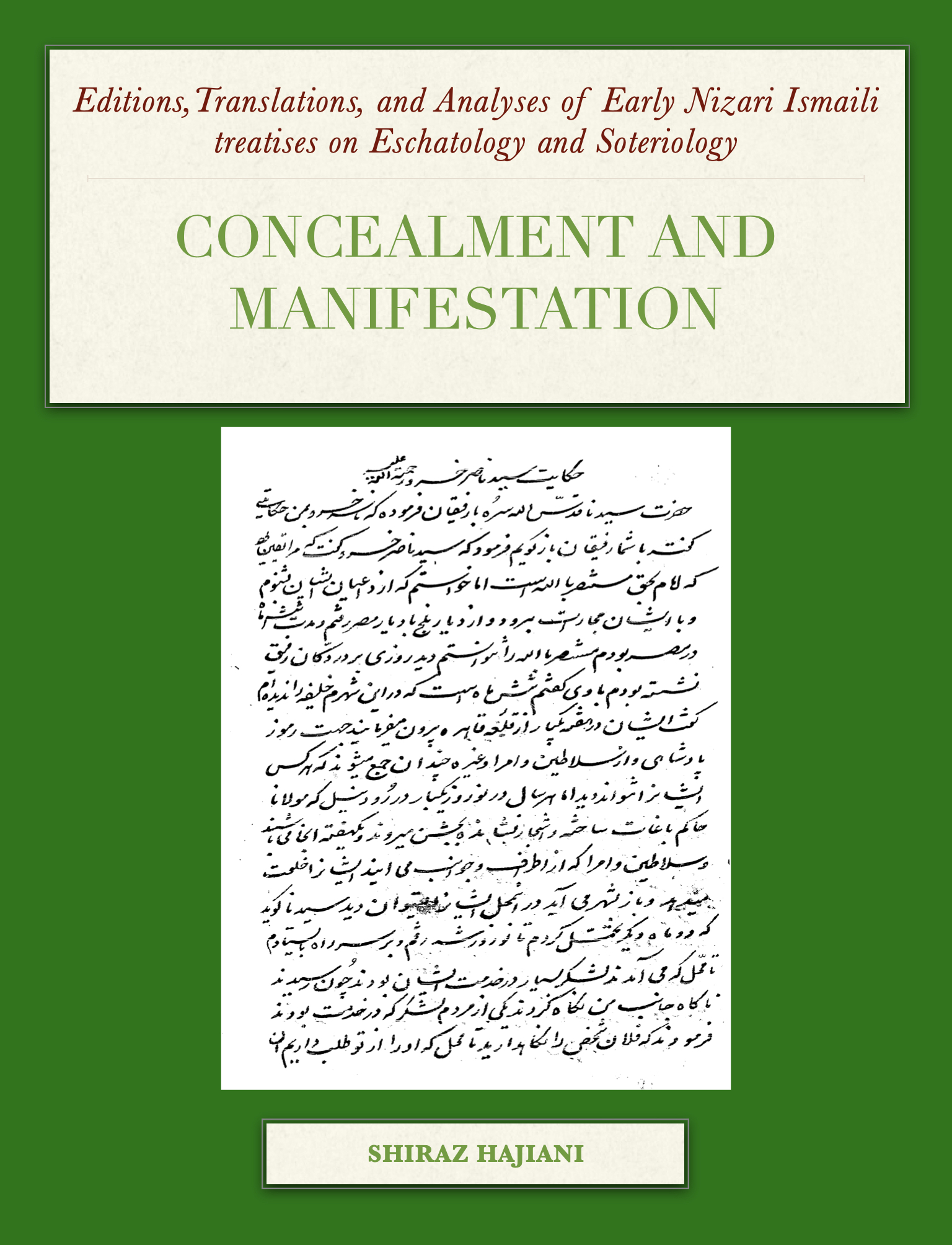
Concealment an Manifestation
After the annihilation of the Nizari Ismaili polity in Iran (fl 1090–1256) by the Mongols and the destruction of their libraries, Nizari thought was preserved by clandestine communities of believers. Only eighteen texts ranging from a few pages to book-length volumes from this period have been published. Concealment and Manifestation is a collection short treatises from the Nizari daʿwa (summons) literature from this period safe-guarded and elaborated by Ismailis in Iran and Central Asia.
This volume consists of the editions, translations, and analyses of eight short texts: an extract from the Arabic Dustūr al-munajimmīn (Canon of the Astronomers), the only known extant work from the fortress of Alamut; two excerpts from Ilkhanid era (fl 1256-1335) historiography which embed fragments of Nizari theological texts; and five treatises from Nizari Persian manuscripts. The anonymous sources with little information of provenance, have tentatively been dated and attributed through careful textual and narrative analyses. Collectively, these texts highlight: the polemics on post-prophetic authority between the Ismailis and the institutionalising Sunni madhāhib (legal schools) at the end of the “Shiʿi centuries”; the Nizari (re)formulations of the doctrines of imamate and taʿlīm (the authoritative teaching of the imam) in the era of concealment (satr) of the descendants of the eponymous Nizār b. al-Mustansīr (r. 1095); and the discourses amongst the Nizari factions to bring about the manifestation (ẓuhūr) of their imam. The analyses of this collection of texts revise long-held scholarly assumptions about political, soteriological and eschatological thought in early Nizari society.
Under Contract with the Institute of Ismaili Studies and Bloomsbury Publication (2027)
Pictured on the cover: First page of Ḥikāyat-i Sayyid Nāṣir-i Khusraw from Manuscript F-2385 (Wazīrī collection), Tehran University, Tehran

Ḥasan-i Ṣabbāḥ and
the Emergence of Nizari Ismailism
Ḥasan-i Ṣabbāḥ and the Emergence of Nizari Ismailism is the first monograph-length study of Ḥasan-i Ṣabbāḥ (r. 1090-1124), the founder of Nizari Ismailism. Moving away from the “great man” history, the study focusses on factionalism among the Nizaris as well as relations, not just conflicts, between the Nizaris and the Saljuqs (fl 1040–1194). Based on new readings of historical sources supplemented by newly uncovered Nizari doctrinal sources and grounded in multi-disciplinary approaches of history, historiography, theology, the study of religion, textual and narrative analyses, and digital humanities methodologies, it examines the emergence of Nizari Ismailism on the tableau of wider religious and societal discourses in the Islamicate realms during the Early Middle Period (ca 900-1300). During this time power transferred from city-dwelling Arabs and Iranians to Turkic nomads, and religious hegemony shifted from the Shiʿis to the Sunnis.
Work in Progress (2027)
Pictured on the Cover: Alamut, Photo Courtesy of Sylvie Franquet
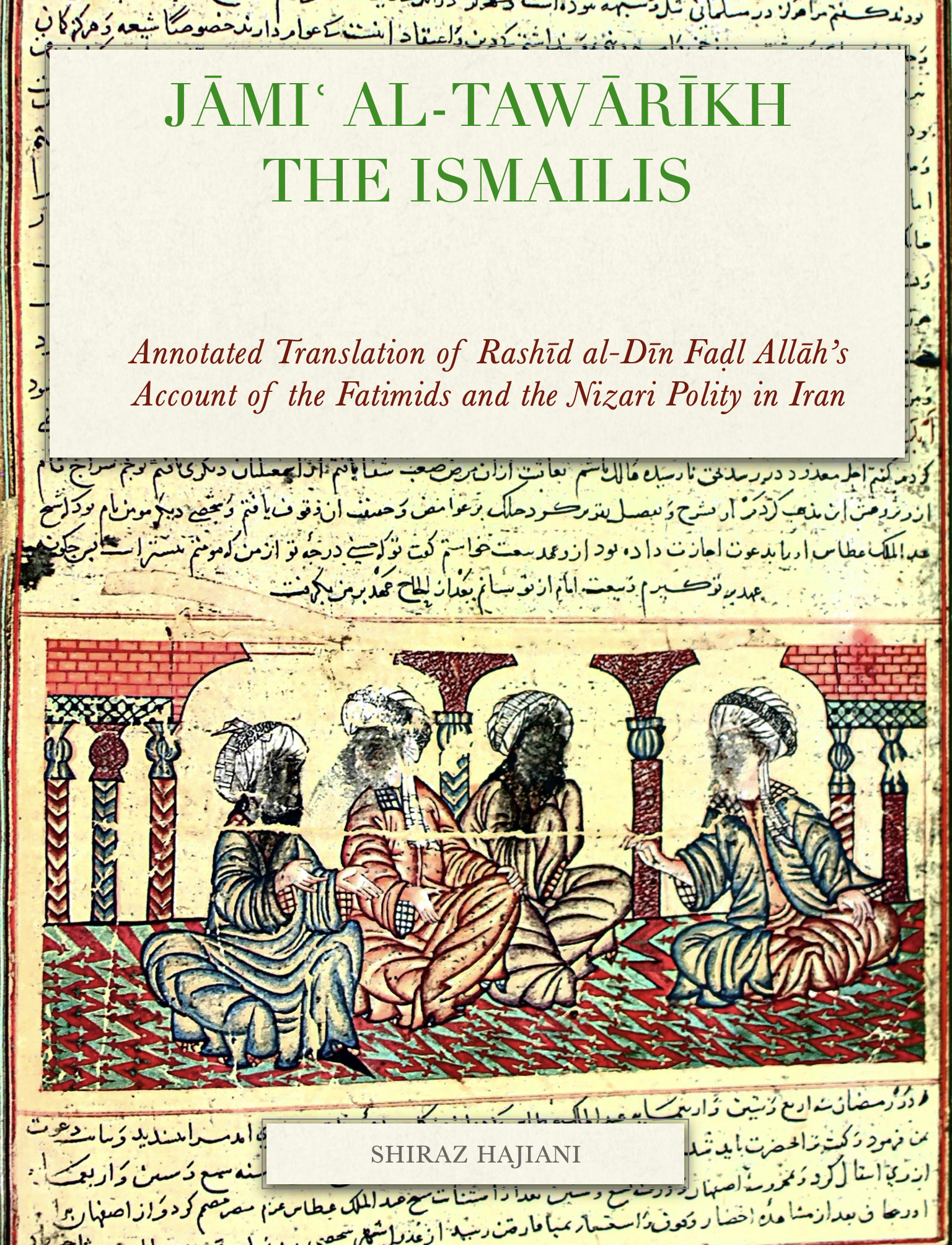
Jāmiʿ al-tawārīkh
The Ismailis
As the Mongol soldiers were dismantling the battlements of the Nizari Ismaili fortress of Alamut, a Sunni official Alāʾ al-Dīn ʿAṭā-Malik Juwaynī (d. 1283) was granted permission by the prince, Hūlāgū b. Tolui b. Chingis Khān to plunder its treasures. From its famed library he took many scientific instruments, copies of the Qurʾan, and a few texts of Nizari daʿwa (summons) literature. He used these texts to write a vitriolic dynastic history of the Fatimids and Nizari Ismailis in his Taʾrīkh-i jahān-gushā (History of the World-Conqueror) completed in 1260. Decades later, the Ilkhanid wazīr (prime minister) Rashīd al-Dīn Faḍl Allāh Ṭabīb al-Hamadāni (d. 1318) included a dynastic history of the Fatimids and Nizari Ismailis in his universal history, the Jāmiʿ al-tawārīkh (Compendium of Histories) completed in 1310. Born in a privileged family of Jewish refugees in a Nizari fortress, Rashīd al-Dīn spent his early years amongst the Nizaris; as a result his account is drastically less hostile than that of Juwaynī. While he followed the structure in Juwayni’s work with many passages copied verbatim; his account is more elaborate in content suggesting that his team had access to the texts Juwanī plundered as well as additional sources and possible access to Nizari witnesses.
Juwaynī’s history was translated into English in 1958 by John Andrew Boyle. Parts of Rashīd al-Dīn’s Jāmiʿ al-tawārīkh have been translated by Wheelor Thackston. This volume contains annotated translation of Rashīd al-Dīn’s account of the Fatimids and Nizari polity in Iran in the Jāmiʿ al-tawārīkh.
Work in Progress (2028)
Pictured on the cover: Ḥasan-i Ṣabbāḥ’s pledge of allegience to the Fatimid imam-caliph, al-Mustanṣir (r. 1036-1095) and acceptance in the Ismaili daʿwa (summons), Folio 358b of Manuscript Hazine 1653, Topkapi Palace Library, Istanbul.
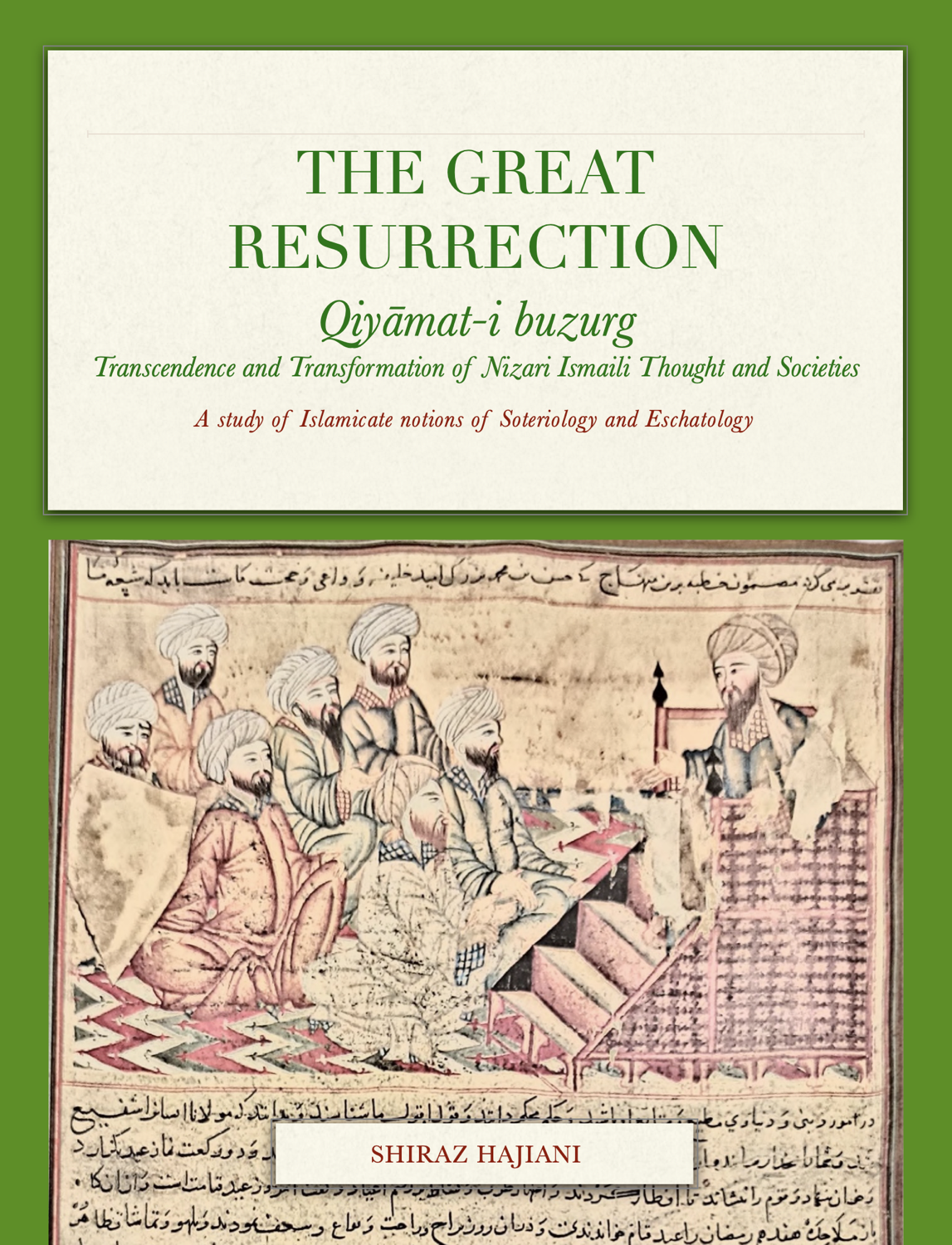
The Great Resurrection (Qiyāmat-i Buzurg)
This is the first English-language monograph-length study of the Qiyāmat-i buzurg (the Great Resurrection) or Qiyāmat-i Qiyāmāt (Resurrection of Resurrections) enacted at the legendary Nizari Ismaili fortress of Alamut on 17 Ramandan 559/15 August 1164. The earliest most complete accounts of the Nizari Ismailis were written by Ilkhanid era (fl. 1256-1335) Sunni historians with avowed antipathy to the Ismailis. They based their writing on doctrinal literature plundered from Nizari libraries as the Mongols destroyed the Nizari polity in Iran. From these texts, they construed the event of the Qiyāma and its aftermath as extreme antinomianism and heresy. These judgements were cast a hundred years after the events; however, no reports of the event or heretical antinomian activity are found in contemporary histories. However, modern scholarship has continued this discourse in their discussions of “abrogation of the shariʿa”.
In this study, the paradigms and prejudices of the chronicles are unpacked to access the fragments of Nizari doctrinal literature they preserved. These along with the small number of published doctrinal texts and several treatises edited and translated for this research are used to map Ismaili Shiʿi conceptions of theology, cosmology, prophecy, imamate, soteriology, eschatology and anthropology as they evolved into the teachings of the Qiyāma. These teachings synthesised early (9-10th century) Ismaili thought infused with Neoplatonic cosmology along with later theological conceptions into the doctrines of transcendence which transformed Nizari societies. Ismaili notions of eschatology had lasting impacts on wider Islamicate religio-political thought in Iran and further afield, this study therefore examines the socio-political contexts and theological connotations of the declaration of the Qiyāma and places them within broader frameworks of human notions of cosmology and soteriology.
Next Project
Pictured on the cover: The ruler of the Nizari polity, later recognised as the imam, Ḥasan ʿalā dhikrihiʾl-salām, proclaims the Qiyāmat-i buzurg on 17-Ramadan 559/15-August 1164, Folio 369a of Manuscript Hazine 1653, Topkapi Palace Library, Istanbul.
Under construction; please don’t move the ladder!
Book chapters and articles coming soon
Church of the Holy Sepulchre, © Shiraz Hajiani 2020